
Payment Integration
One integration layer for every way you get paid.
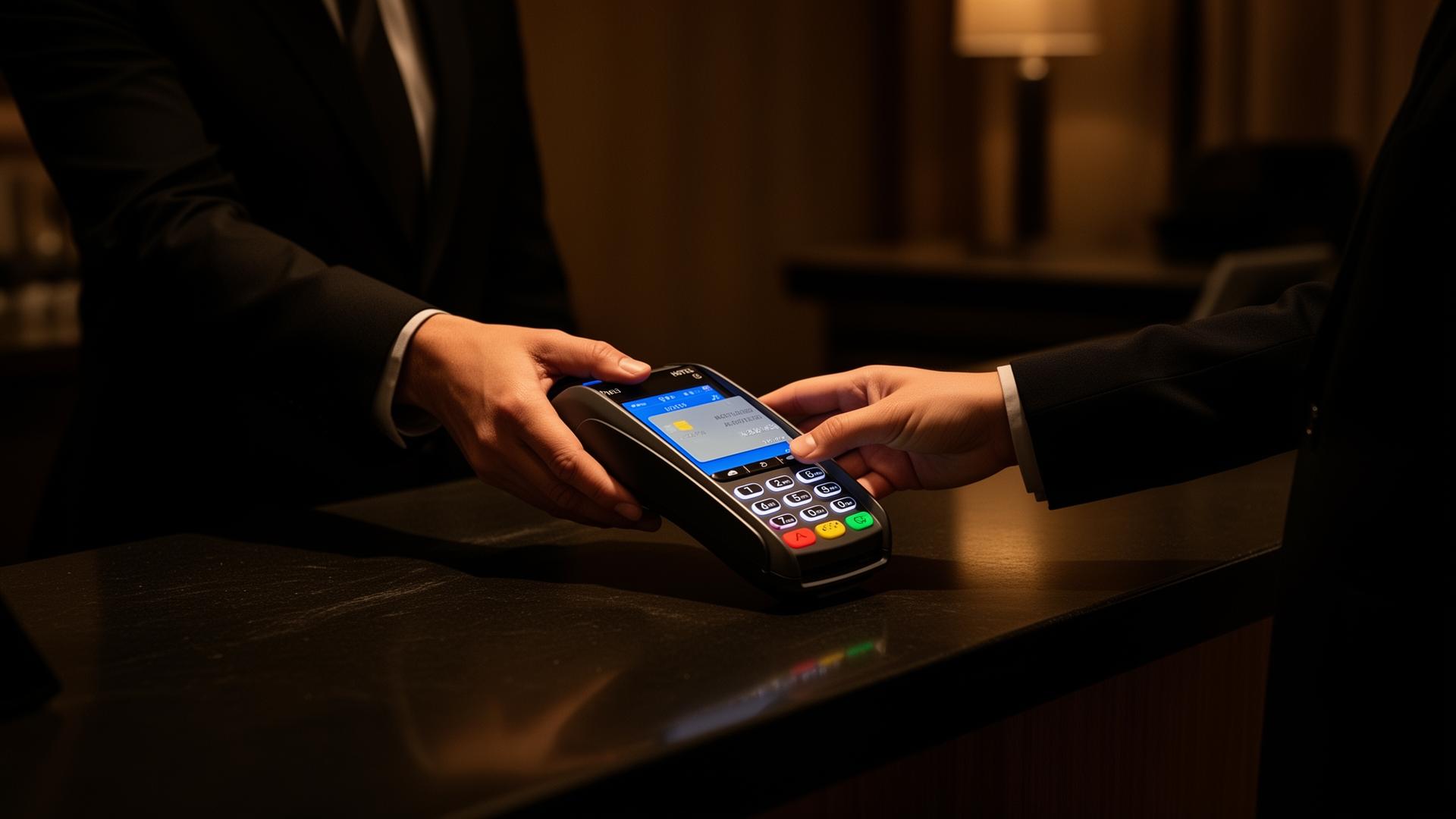
Terminals at the desk, online checkout, pay-by-link, charges raised inside your PMS or POS — payment integration is the layer that connects where you accept money to the gateways, acquirers and methods that approve and move it. Accepting a payment and receiving the money are not the same event. Integration governs the first.
Accept, then move
Integration is the connective tissue between where you take payment and the rails that move it.
On one side sit the points of interaction — terminal, checkout, pay-by-link, in-PMS charge. On the other sit the gateways, acquirers, card schemes and alternative methods that decide whether a payment is approved and, later, move the funds. Integration gets a clean approved or declined back in real time and records the transaction, so every later stage — settlement, reconciliation, accounting — has something accurate to work from.
The elements involved.
- Points of interaction
- Card-present terminals, card-not-present (web/app checkout, MOTO, pay-by-link), and in-context flows raised directly inside the PMS or POS.
- The gateway
- Routes the authorisation request and returns the result. The approve/decline decision point.
- Acquirer / PSP
- Holds the merchant relationship and connects to the schemes and banking rails.
- Card schemes and networks
- The card networks, plus account-to-account and local/regional methods.
- Tokenisation and vaulting
- Reusable tokens replace raw card data (recurring, no-show, deposits) and reduce PCI scope.
- Protocols and APIs
- Terminal-to-host protocols for devices; host APIs for online and back-office flows.
- Authentication
- SCA / 3-D Secure for card-not-present, verifying the cardholder before approval.
- Routing and orchestration
- Multiple acquirers, fallback, and directing each transaction to the best or lowest-cost path.
Why it is hard
Every terminal protocol, acquirer host and payment method behaves differently and must be certified independently. Each new geography adds local methods and rules. Card data carries PCI DSS obligations. And the PMS and POS must stay in sync with what actually happened on the payment side — a mismatch here propagates into every downstream stage.
Key terms.
- Authorisation
- approval to charge, not the movement of money.
- Capture
- flagging an authorised amount to be settled.
- Gateway
- the routing/decision layer.
- Acquirer / PSP
- the merchant's payment processor.
- Tokenisation
- substituting a reusable token for card data.
- SCA / 3DS
- cardholder authentication for online payments.
See payment integration in practice.
Acceptance is the first link in the chain. Talk to our team about your estate, or see how the integration layer works inside the platform.
Knowledge
Payment Orchestration & Integration — questions answered
Quick facts
- Purpose
- A capability of Juno that connects where a property accepts money to the gateways, acquirers and schemes that approve and move it.
- Points of interaction
- Card-present terminals, online checkout, Pay-by-Link, and in-PMS / in-POS charges.
- Core functions
- Authorisation and capture, tokenisation and vaulting, SCA / 3-D Secure authentication, and routing / orchestration across acquirers.
- Protocols
- Terminal-to-host protocols for devices; host APIs for online and back-office flows.
- Why it matters
- An accurate transaction record at acceptance is what later settlement, reconciliation and accounting depend on.
- Related capabilities
- Routing and orchestration across multiple acquirers, including fallback and lowest-cost routing.
Frequently asked questions
What is payment orchestration for hotels?
Payment orchestration is a capability of Juno, 934's hospitality payments platform, that connects where a hotel accepts money to the rails that approve and move it. On one side are the points of interaction — the terminal at the desk, online checkout, Pay-by-Link, and charges raised inside the PMS or POS. On the other are the gateways, acquirers, card schemes and alternative methods that decide whether a payment is approved and later settle the funds. Orchestration routes each authorisation request, returns an approved or declined result, and records the transaction so that settlement, reconciliation and accounting have an accurate basis to work from. Accepting a payment and receiving the money are distinct events; orchestration governs acceptance and feeds settlement. It is the capability the Hospitality and Financial Suites build on.
Related: Juno Hospitality Suite, Juno Financial Suite, Acquiring
What is tokenisation and why does it reduce PCI scope?
Tokenisation substitutes a reusable token for raw card data. Instead of storing or re-using an actual card number for recurring charges, no-show fees or deposits, the system keeps a token that stands in for the card but has no value if exposed. This reduces PCI DSS scope because the obligations apply wherever card data is stored, processed or transmitted — so removing the real card number from terminals, the PMS and staff workflows takes those systems and people out of parts of that obligation. In hospitality, where the same card may be charged at several points across a stay, tokenisation supports deposits, incidentals and balance settlement without holding card details. It underpins how Juno's acceptance layer and Pay-by-Link keep card data out of the PMS.
Related: Pay-by-Link, Juno Hospitality Suite
What is the difference between a gateway, an acquirer and a PSP?
These terms describe different roles in the payment chain. A gateway routes payment authorisation requests and returns the approve or decline result; it is the routing and decision layer. An acquirer is the merchant's payment processor and settlement provider — it holds the merchant relationship, connects to the card schemes and banking rails, and settles the funds to the merchant. A PSP (payment service provider) is a provider that may offer gateway services, acquiring services, or both, depending on its operating model — so a PSP and an acquirer are not necessarily the same thing. Within Juno, acquiring is provided through Worldline and Getnet, with gateway and orchestration capabilities directing transactions to the appropriate path.
Related: Acquiring
What is routing and orchestration across multiple acquirers?
Routing and orchestration direct each transaction to an appropriate payment path rather than sending everything down one fixed connection. Where a property works with more than one acquirer, orchestration can select a path per transaction — for example by market, method or cost — and apply fallback if one path is unavailable, so a payment can still be attempted. For the property this means one integration with the acquirer connections handled behind it. The live site describes this as routing and orchestration across multiple acquirers, with fallback and directing each transaction to the best or lowest-cost path. The accurate record produced at this layer is what later flows into settlement and reconciliation in the Juno Financial Suite.
Related: Juno Financial Suite, Acquiring
